> ## Documentation Index
> Fetch the complete documentation index at: https://docs.speckle.systems/llms.txt
> Use this file to discover all available pages before exploring further.
# How to use Speckle for Rhino
> Step-by-step guide for using the Rhino connector
export const app_4 = "Rhino"
export const app_3 = "Rhino"
export const app_2 = "Rhino"
export const app_1 = "Rhino"
export const app_0 = "Rhino"
export const versions_0 = "7 & 8"
export const os_0 = "Windows"
Speckle currently supports {app_0} versions: **{versions_0}**. The {app_0} connector works on **{os_0}**
only.
## Setup
{' '}
The **Rhino** and **Grasshopper** connectors are bundled, so if you installed one, you don't need
to install the other.
Install your [{app_1} connector](/connectors/installation)
1. Type **Speckle** in the command line, or 2. Select **Speckle** in the Speckle Toolbar to open
the Rhino connector.
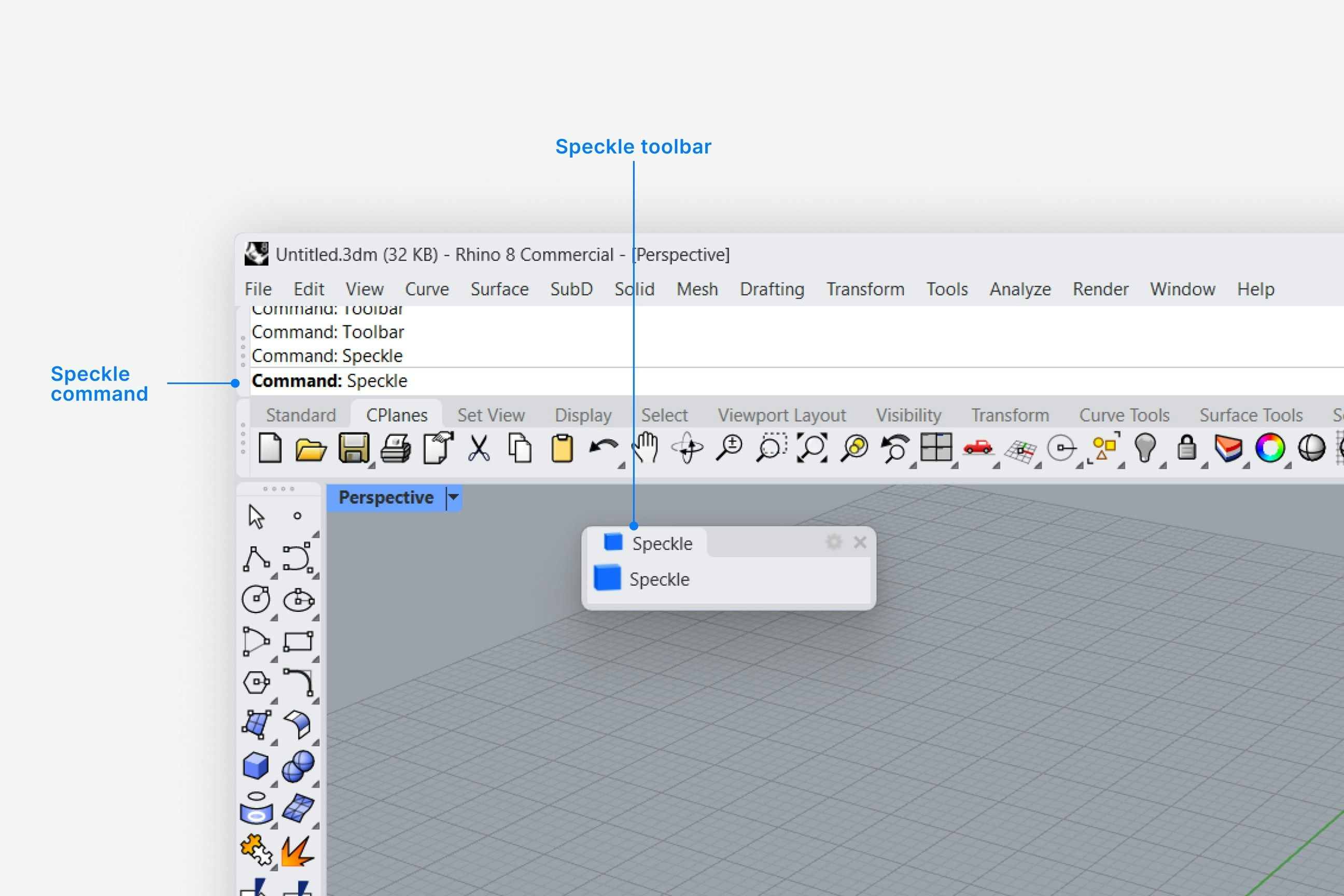 3. Select **Sign in** if you haven't linked your Speckle account.
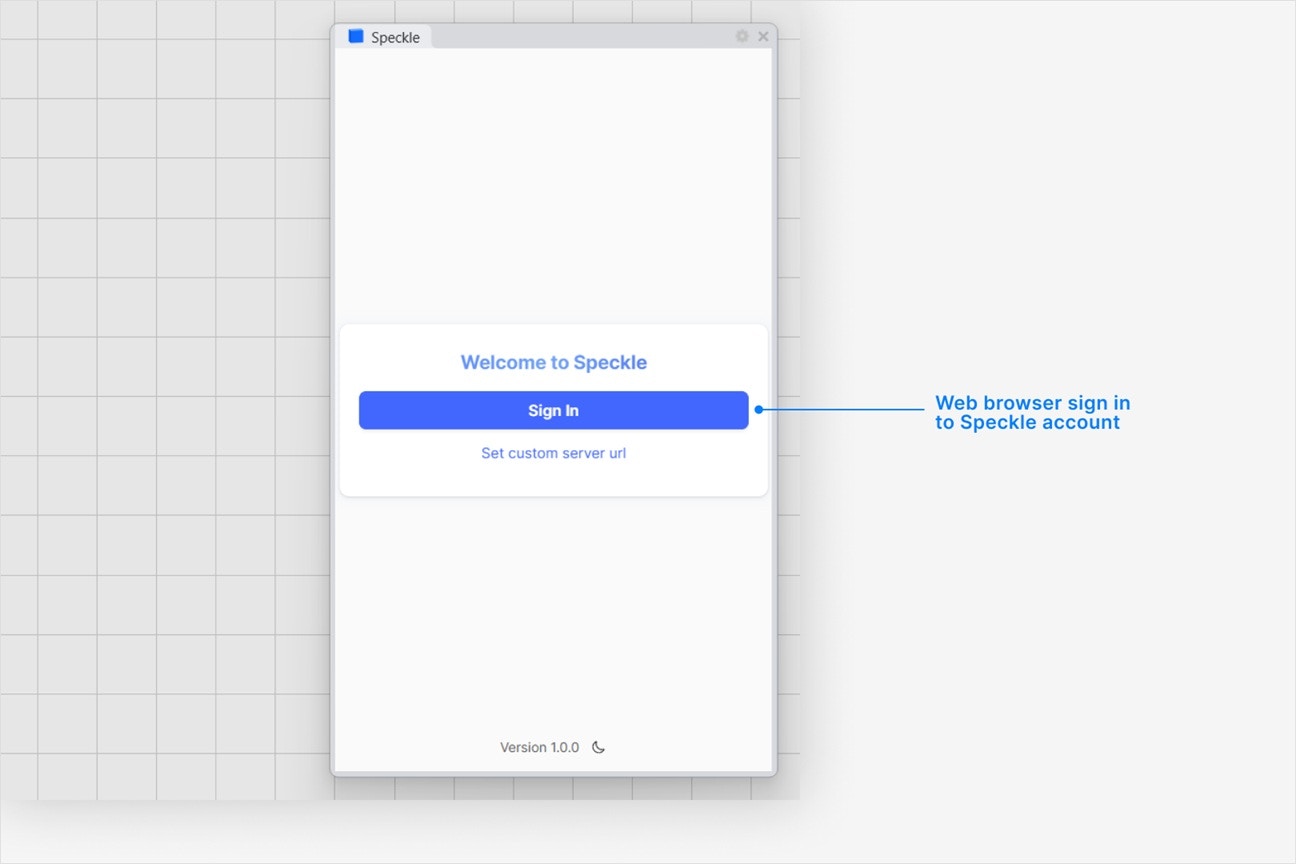 After installation, if you don't see the Speckle Rhino toolbar, you can manually load it:
1. Type the **Toolbar** command in Rhino.
2. Select **File** > **Open** and navigate to your Rhino UI folder: `AppData\Roaming\McNeel\Rhinoceros\7.0\UI\Plug-ins`
3. Select the **Speckle.Connectors.Rhino.rui** file and press **Enter**.
You should now see the toolbar in Rhino.
Early versions of Rhino 8 may not have propery framework compatibility for plugins.
We advise you to upgrade to Rhino 8.9 and above if you are using an earlier version.
You can also change your Rhino runtime:
1. Type the **SetDotNetRuntime** command in Rhino
2. Select the **NETFramework** option
3. Restart Rhino
1. Make sure your version of {app_2} is one of the supported versions.
2. Uninstall and [reinstall your connector](/connectors/installation).
Note: Make sure you are **not** selecting **Run as administrator** when installing - this will install for the administrator user, and not your own user.
Instead, double-click the `.exe` or right-clicking and then selecting `Open` to run the installer.
Installation issues can also be caused by conflicting plugins.
If you're still experiencing problems, please report it in our [Community Forum](https://speckle.community/c/help) and include the following information:
* Your application version
* Your Speckle connector version
If your connector window is floating, **try docking it to your application** to fix blank UI
issues. For major issues, you can sometimes find a `log` file in your directory at
`AppData\Roaming\Speckle\Logs`. Please report your problem in our [Community
Forum](https://speckle.community/c/help) and include the following information: - Your application
version - Your Speckle connector version - A copy of the log
This can happen if our **desktop service** isn't running. Desktop Service is used for
authenticating new accounts. If it's not running, search for **Speckle Desktop Services** in
Windows search and run it.
All Speckle connectors are installed like any other program. You can uninstall them directly from
your system's `Applications`. For a full uninstall, you should also remove **Speckle Desktop
Services** as well as your Speckle connector.
You can always download the latest version of the connector [in the web
app](https://app.speckle.systems/connectors). If a new version of the connector is available, you
will also see a notification in your connector UI.
## Publishing a Model
After installation, if you don't see the Speckle Rhino toolbar, you can manually load it:
1. Type the **Toolbar** command in Rhino.
2. Select **File** > **Open** and navigate to your Rhino UI folder: `AppData\Roaming\McNeel\Rhinoceros\7.0\UI\Plug-ins`
3. Select the **Speckle.Connectors.Rhino.rui** file and press **Enter**.
You should now see the toolbar in Rhino.
Early versions of Rhino 8 may not have propery framework compatibility for plugins.
We advise you to upgrade to Rhino 8.9 and above if you are using an earlier version.
You can also change your Rhino runtime:
1. Type the **SetDotNetRuntime** command in Rhino
2. Select the **NETFramework** option
3. Restart Rhino
1. Make sure your version of {app_2} is one of the supported versions.
2. Uninstall and [reinstall your connector](/connectors/installation).
Note: Make sure you are **not** selecting **Run as administrator** when installing - this will install for the administrator user, and not your own user.
Instead, double-click the `.exe` or right-clicking and then selecting `Open` to run the installer.
Installation issues can also be caused by conflicting plugins.
If you're still experiencing problems, please report it in our [Community Forum](https://speckle.community/c/help) and include the following information:
* Your application version
* Your Speckle connector version
If your connector window is floating, **try docking it to your application** to fix blank UI
issues. For major issues, you can sometimes find a `log` file in your directory at
`AppData\Roaming\Speckle\Logs`. Please report your problem in our [Community
Forum](https://speckle.community/c/help) and include the following information: - Your application
version - Your Speckle connector version - A copy of the log
This can happen if our **desktop service** isn't running. Desktop Service is used for
authenticating new accounts. If it's not running, search for **Speckle Desktop Services** in
Windows search and run it.
All Speckle connectors are installed like any other program. You can uninstall them directly from
your system's `Applications`. For a full uninstall, you should also remove **Speckle Desktop
Services** as well as your Speckle connector.
You can always download the latest version of the connector [in the web
app](https://app.speckle.systems/connectors). If a new version of the connector is available, you
will also see a notification in your connector UI.
## Publishing a Model
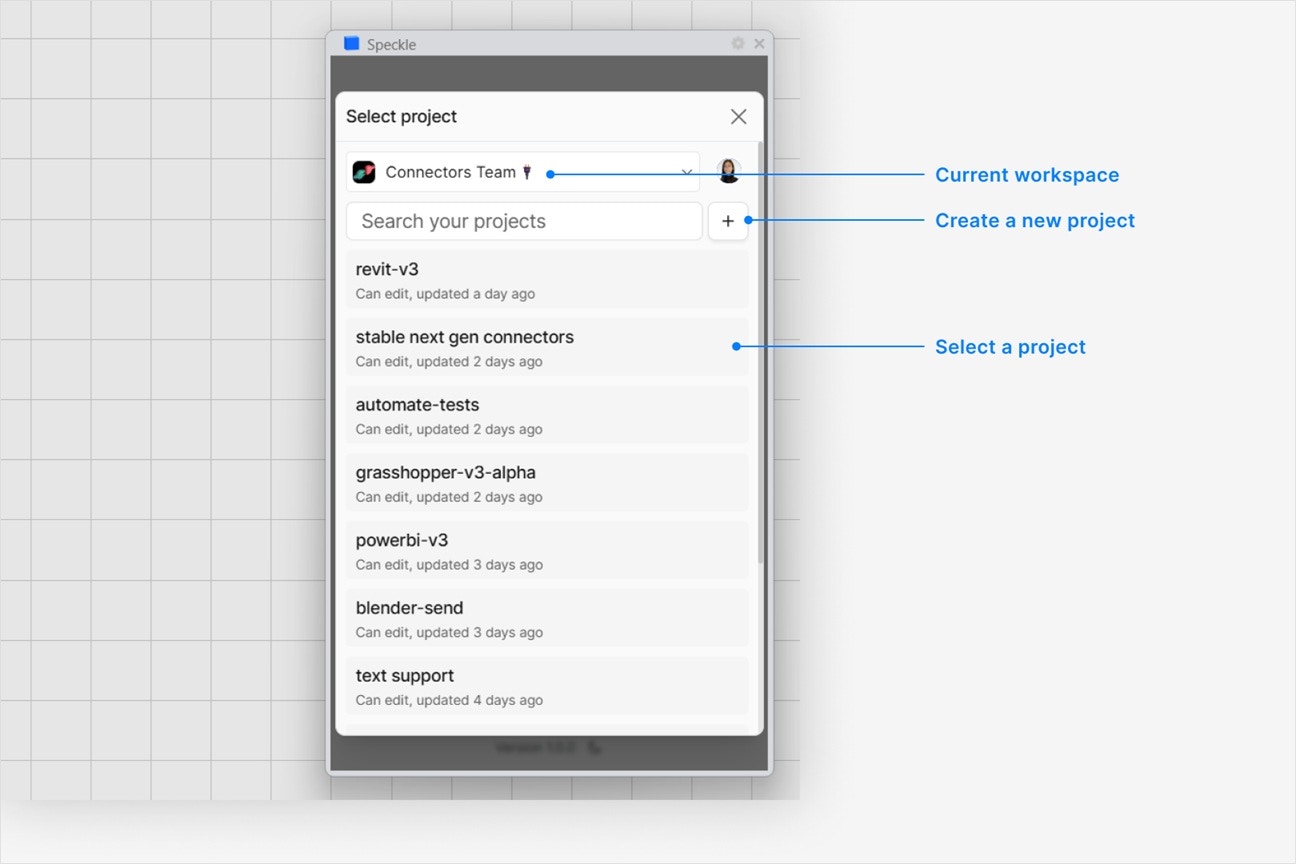
 * Select an existing project - or select **New Project** to create one
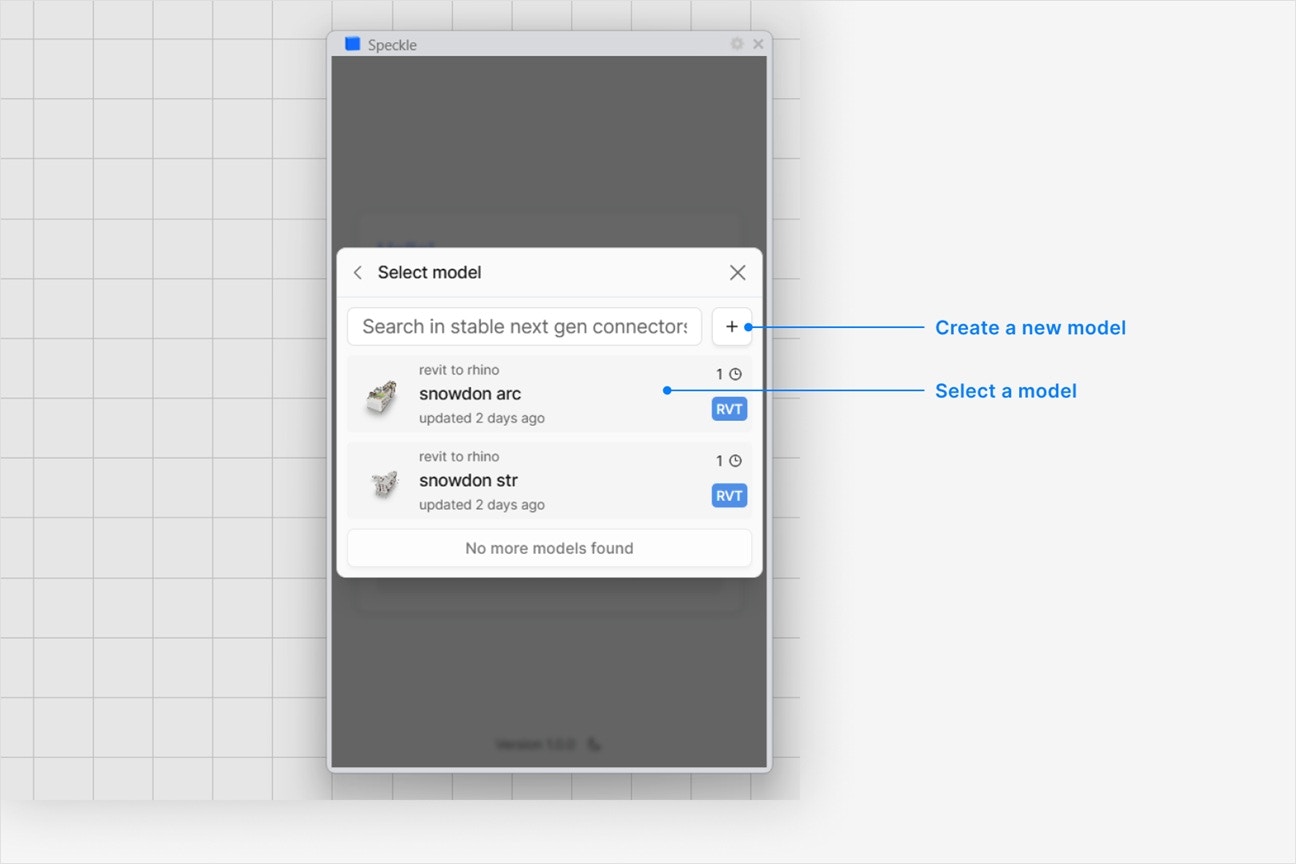
 * Select an existing model - or select **New Model** to create one
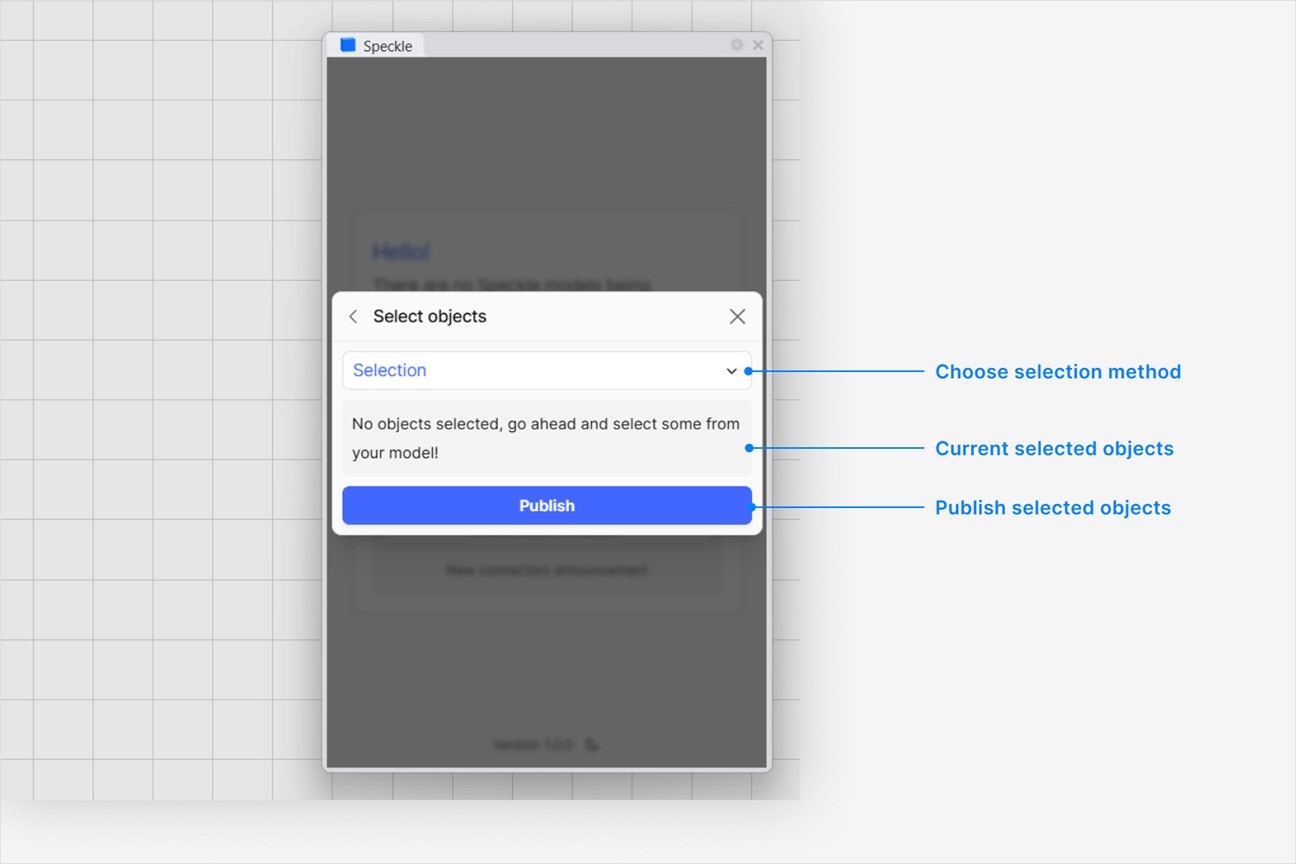
 1. In your application viewport, select the elements you want to publish.
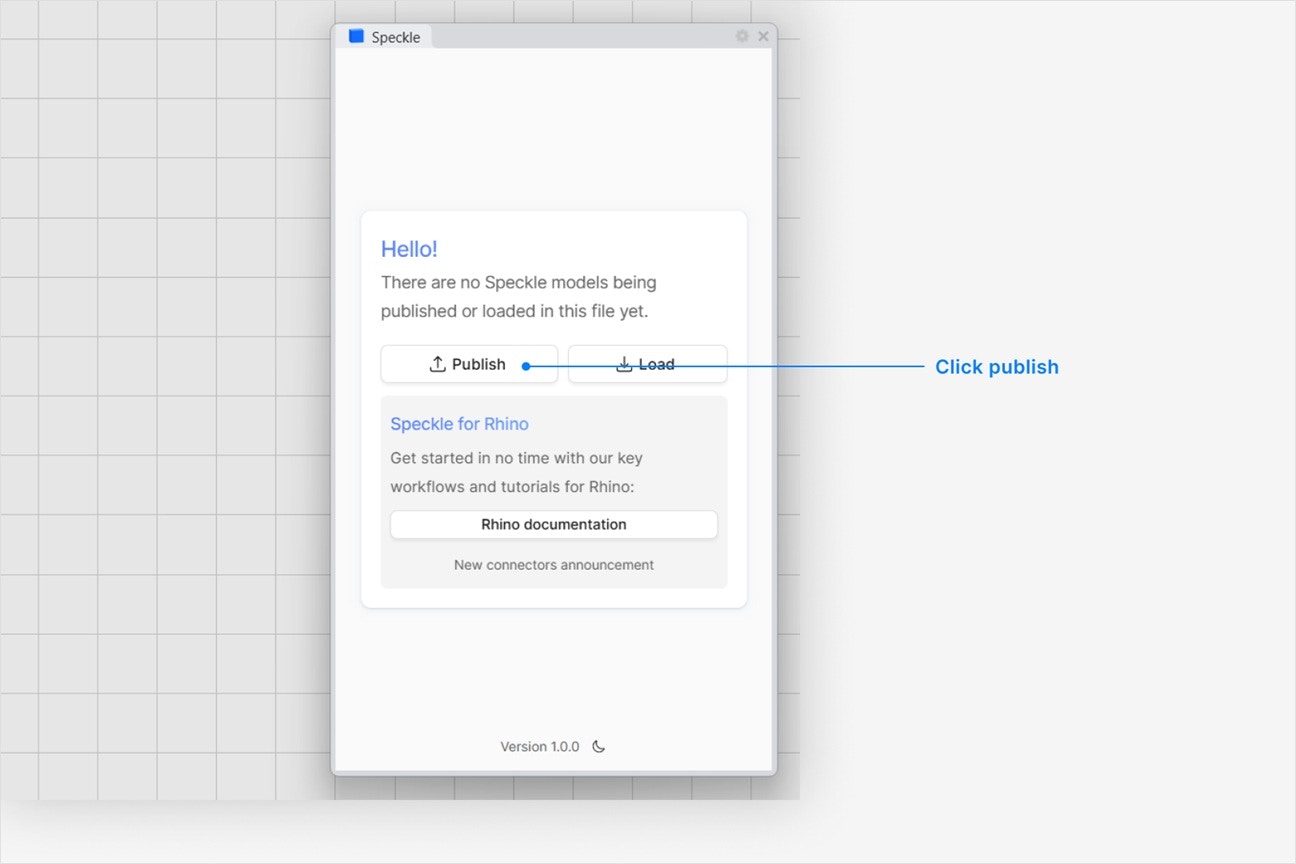
2. Select **Publish**.
1. In your application viewport, select the elements you want to publish.
2. Select **Publish**.
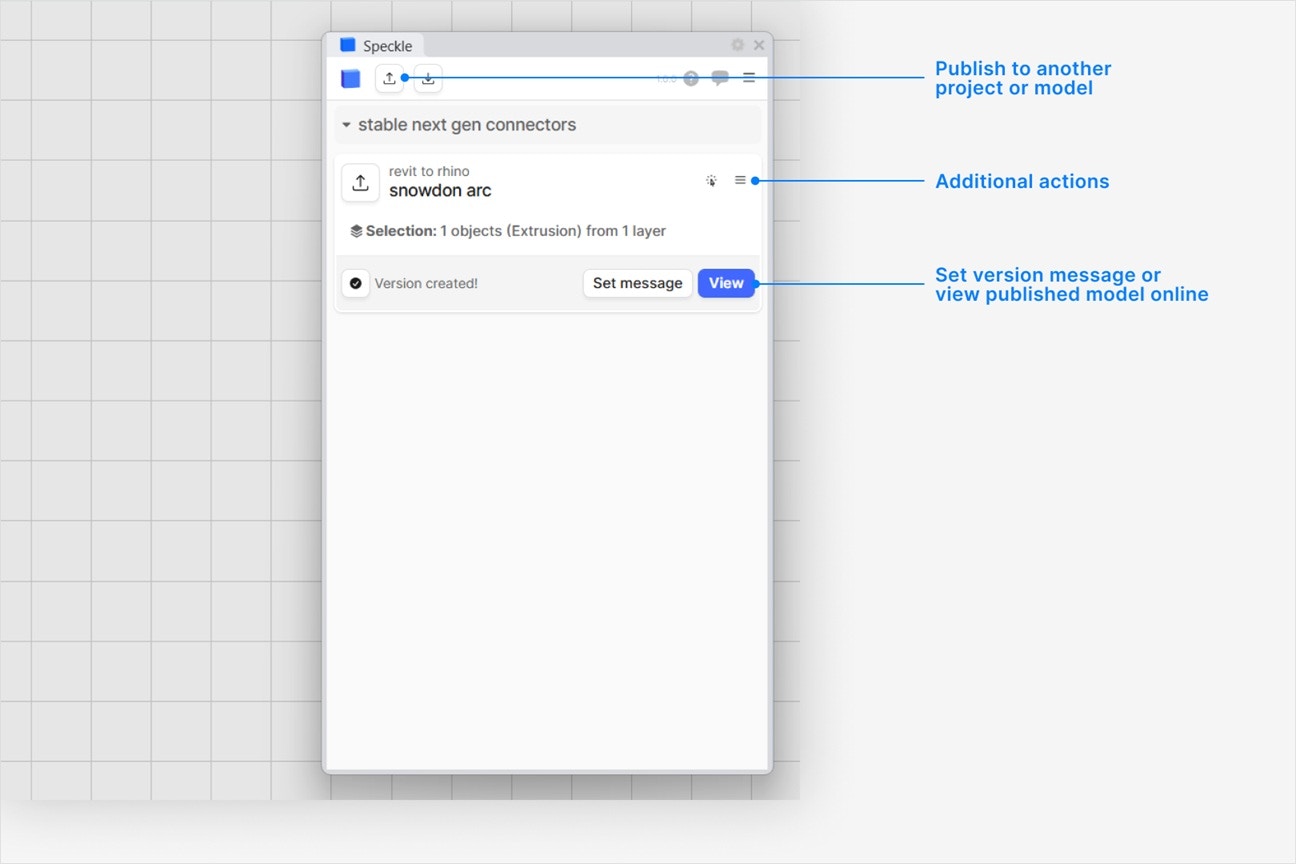 3. Your model is now published to Speckle and is available to the rest of your team.
All types of visible geometry can be published, as well as `hatch`, `text`, and `blocks`. Each published object contains the following information:
* Name
* Color
* Render material
* User strings
1. Click the blue **filter** field at the top of **Select objects** dialog while publishing a new version.
3. Your model is now published to Speckle and is available to the rest of your team.
All types of visible geometry can be published, as well as `hatch`, `text`, and `blocks`. Each published object contains the following information:
* Name
* Color
* Render material
* User strings
1. Click the blue **filter** field at the top of **Select objects** dialog while publishing a new version.
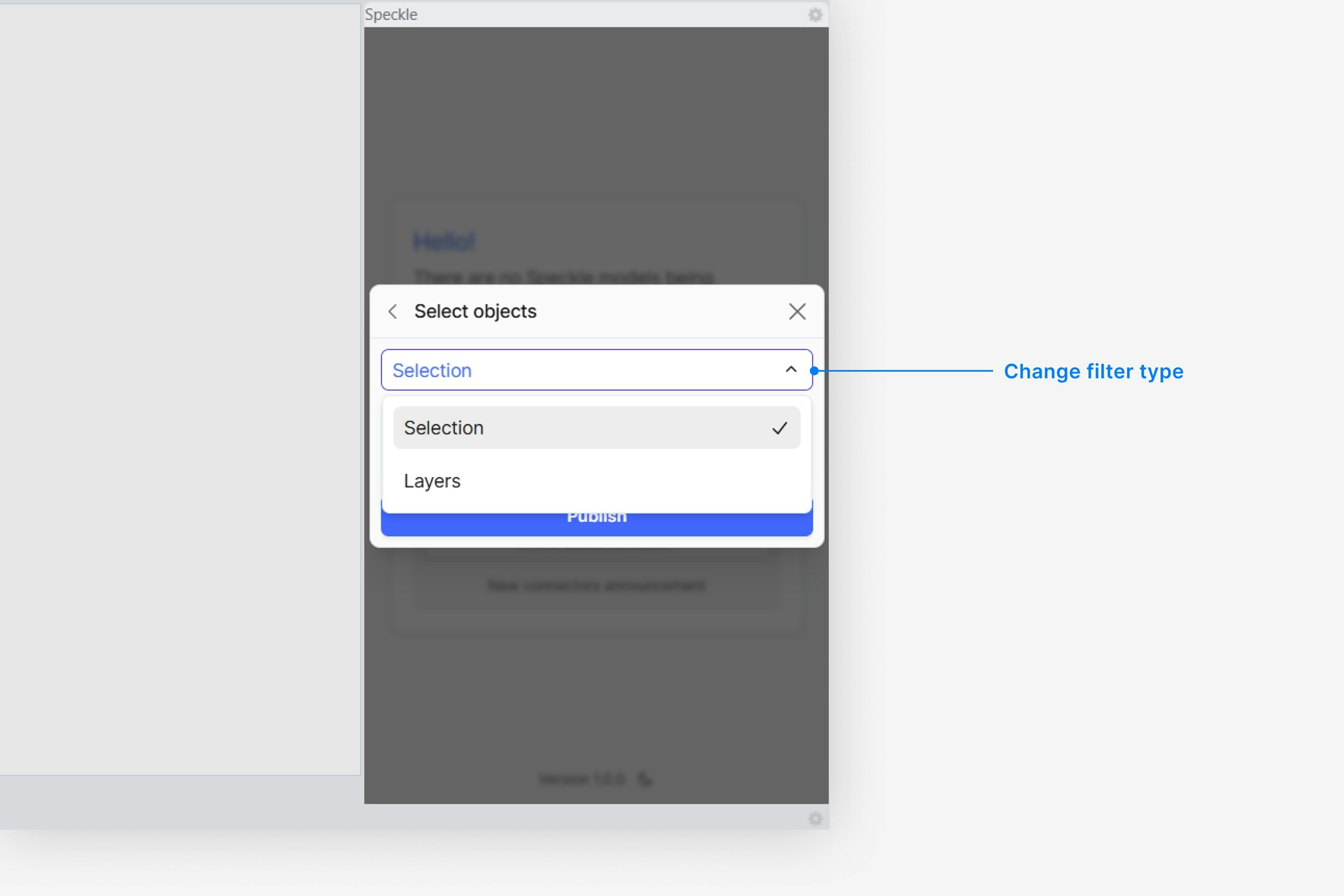 2. Select **Layers**, and then click on any number of layers you would like to add to the filter.
All custom properties can be found under the **properties** field when you select and view a Rhino object in your browser.
2. Select **Layers**, and then click on any number of layers you would like to add to the filter.
All custom properties can be found under the **properties** field when you select and view a Rhino object in your browser.
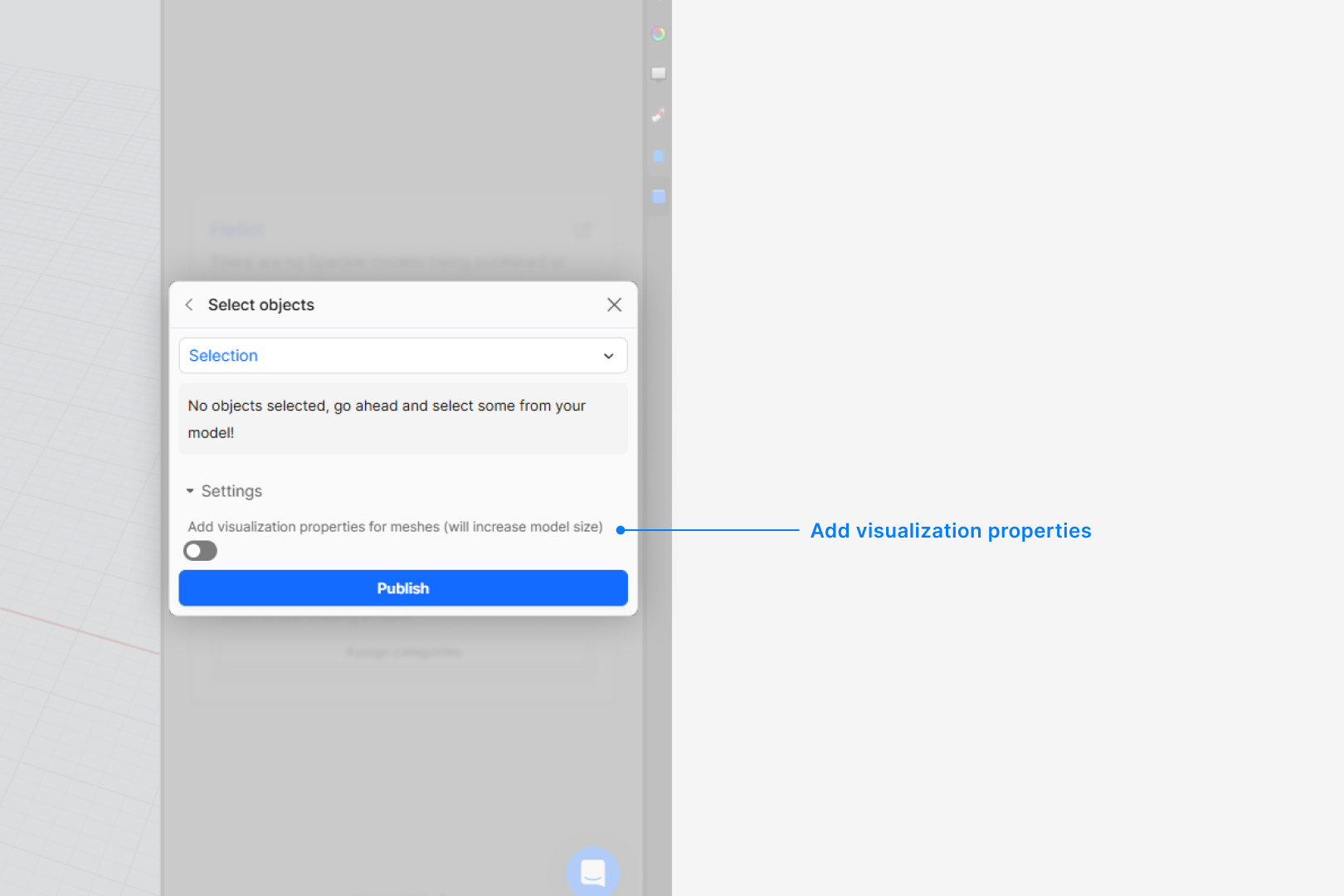 When publishing a model, you'll see a setting called **"Add visualization properties (will increase model size)"**. This setting is **turned off by default**.
* **With the setting OFF**: Vertex normals, vertex colors, and texture coordinates are not included on meshes, resulting in smaller model sizes.
* **With the setting ON**: All visualization data is extracted and included.
When to enable this:
* You want the highest visual fidelity in the Speckle viewer
* You need full interoperability with rendering tools (e.g., Blender, other Rhino instances)
When to keep it disabled:
* You want the smallest data sizes possible (e.g., for Power BI or other data-focused workflows)
Yes. When you publish a model, all your **named views** are automatically included, no extra steps needed.
**Note:** Only perspective named views are published. Parallel projection views are not included.
In the viewer, select the **View Modes** button in the side bar, and switch the view mode to
**Shaded**. If you still don't see your object colors, let us know in our [Community
Forum](https://speckle.community/c/help)
**Image texture files are not supported.** Speckle does **not** transfer bitmaps or other image maps (such as JPG or PNG files) embedded in materials from the source application.
Speckle **does** carry [PBR-style material data](/developers/sdks/python/guides/understanding-speckle-mesh#render-materials) in general—where a connector maps to it, materials can include properties such as base colour, opacity, metalness, roughness, and emissive colour. That is not the same as shipping texture images: you get numeric material parameters, not image assets used for wood grain, brick patterns, and similar in the authoring tool.
Different materials can still appear separately in the destination with distinct colours and PBR fields. What you see may look closer to a consistent shaded or PBR preview than to the full render-appearance with image maps in tools such as Revit or SketchUp. To use image textures in your target application, apply or remap them locally after you publish or load.
After you publish a Speckle model, click on the **Report** button to see any errors that may have
occurred. Click on any item in the report to highlight that item in your application. Some objects
may not be supported for publishing.
## Loading a Model
When publishing a model, you'll see a setting called **"Add visualization properties (will increase model size)"**. This setting is **turned off by default**.
* **With the setting OFF**: Vertex normals, vertex colors, and texture coordinates are not included on meshes, resulting in smaller model sizes.
* **With the setting ON**: All visualization data is extracted and included.
When to enable this:
* You want the highest visual fidelity in the Speckle viewer
* You need full interoperability with rendering tools (e.g., Blender, other Rhino instances)
When to keep it disabled:
* You want the smallest data sizes possible (e.g., for Power BI or other data-focused workflows)
Yes. When you publish a model, all your **named views** are automatically included, no extra steps needed.
**Note:** Only perspective named views are published. Parallel projection views are not included.
In the viewer, select the **View Modes** button in the side bar, and switch the view mode to
**Shaded**. If you still don't see your object colors, let us know in our [Community
Forum](https://speckle.community/c/help)
**Image texture files are not supported.** Speckle does **not** transfer bitmaps or other image maps (such as JPG or PNG files) embedded in materials from the source application.
Speckle **does** carry [PBR-style material data](/developers/sdks/python/guides/understanding-speckle-mesh#render-materials) in general—where a connector maps to it, materials can include properties such as base colour, opacity, metalness, roughness, and emissive colour. That is not the same as shipping texture images: you get numeric material parameters, not image assets used for wood grain, brick patterns, and similar in the authoring tool.
Different materials can still appear separately in the destination with distinct colours and PBR fields. What you see may look closer to a consistent shaded or PBR preview than to the full render-appearance with image maps in tools such as Revit or SketchUp. To use image textures in your target application, apply or remap them locally after you publish or load.
After you publish a Speckle model, click on the **Report** button to see any errors that may have
occurred. Click on any item in the report to highlight that item in your application. Some objects
may not be supported for publishing.
## Loading a Model
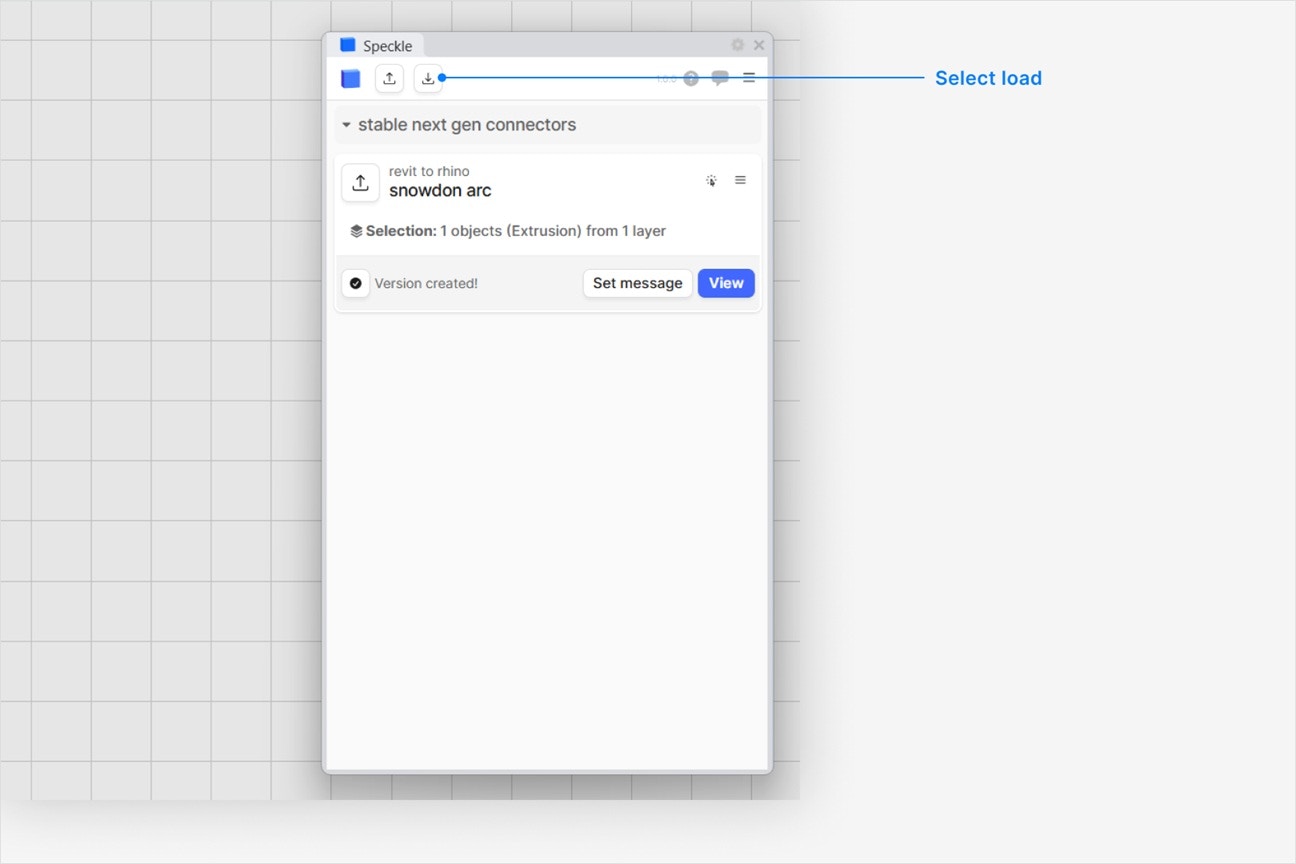
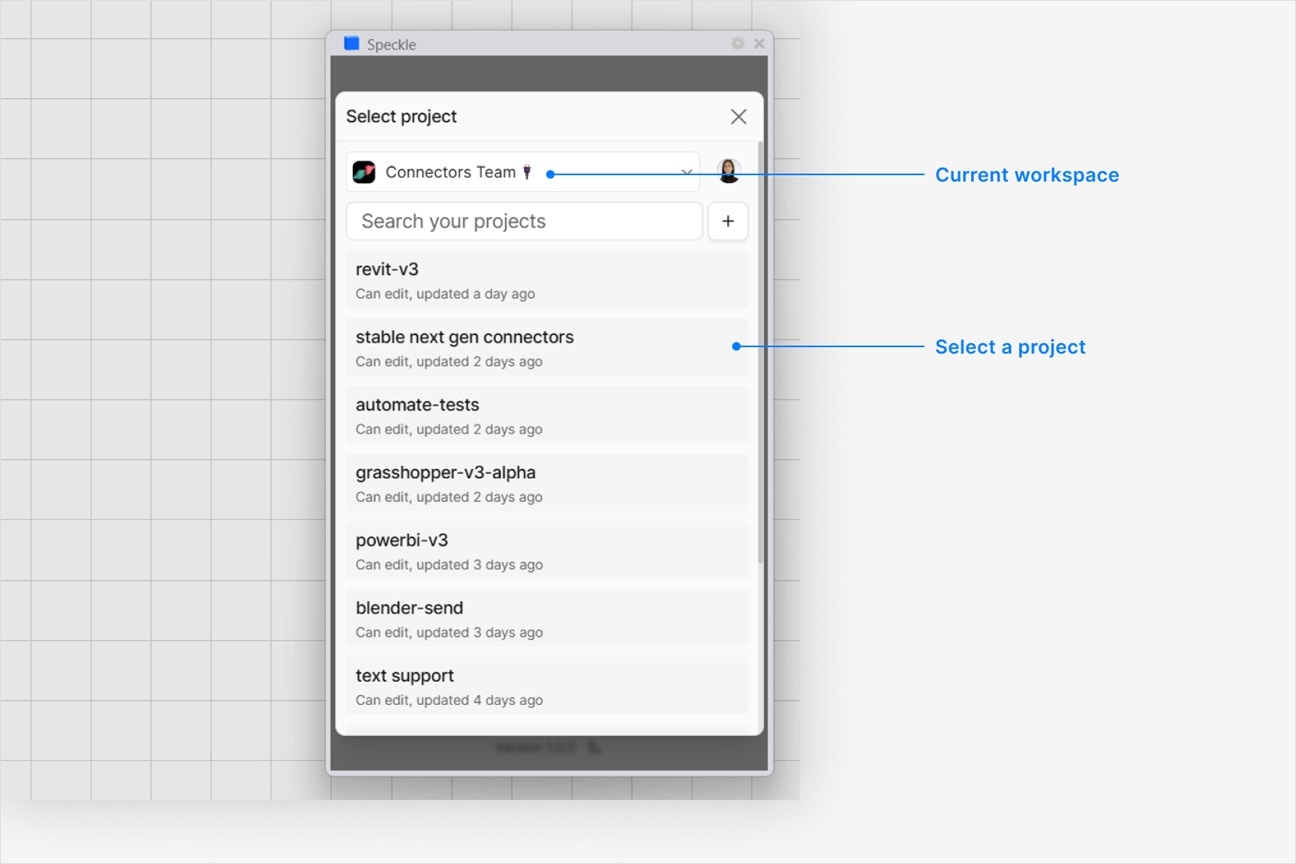
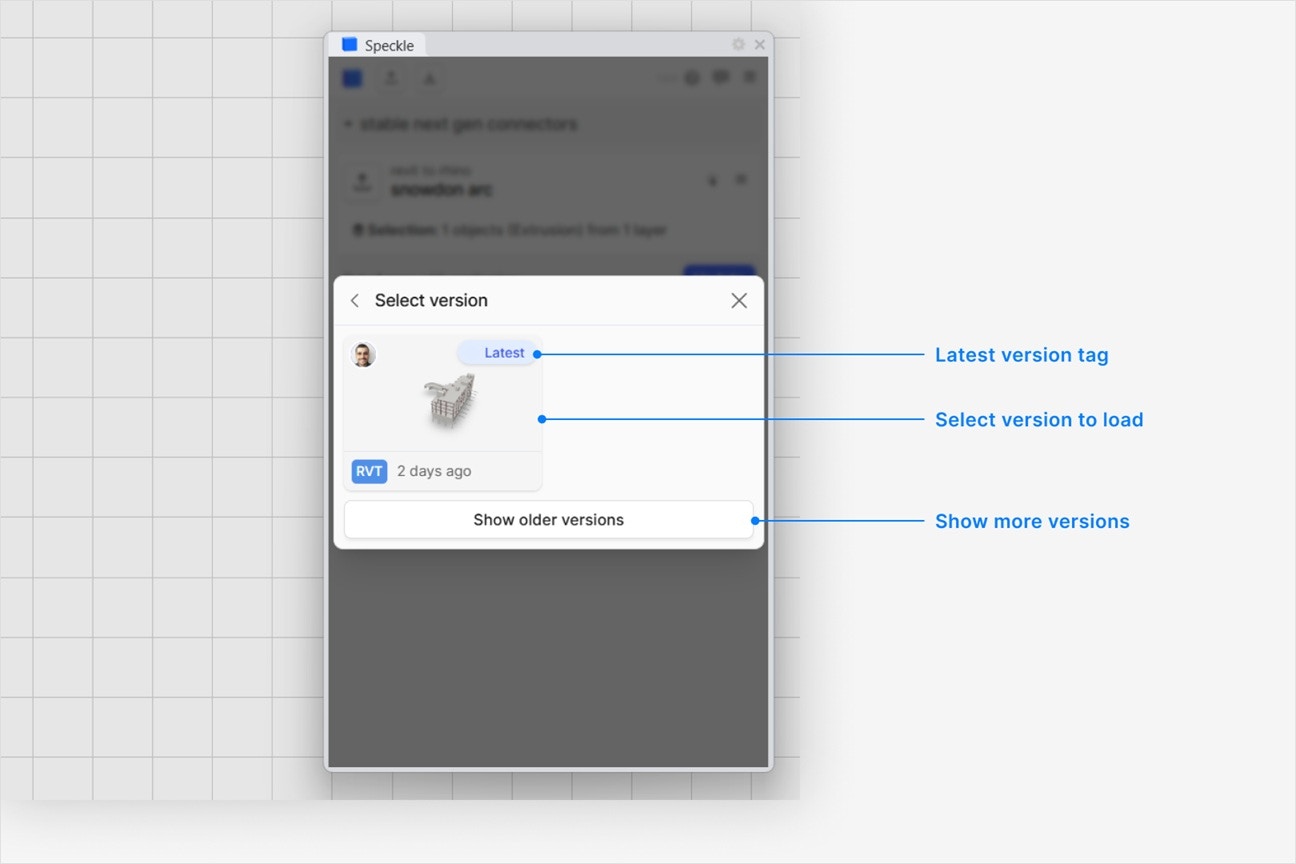
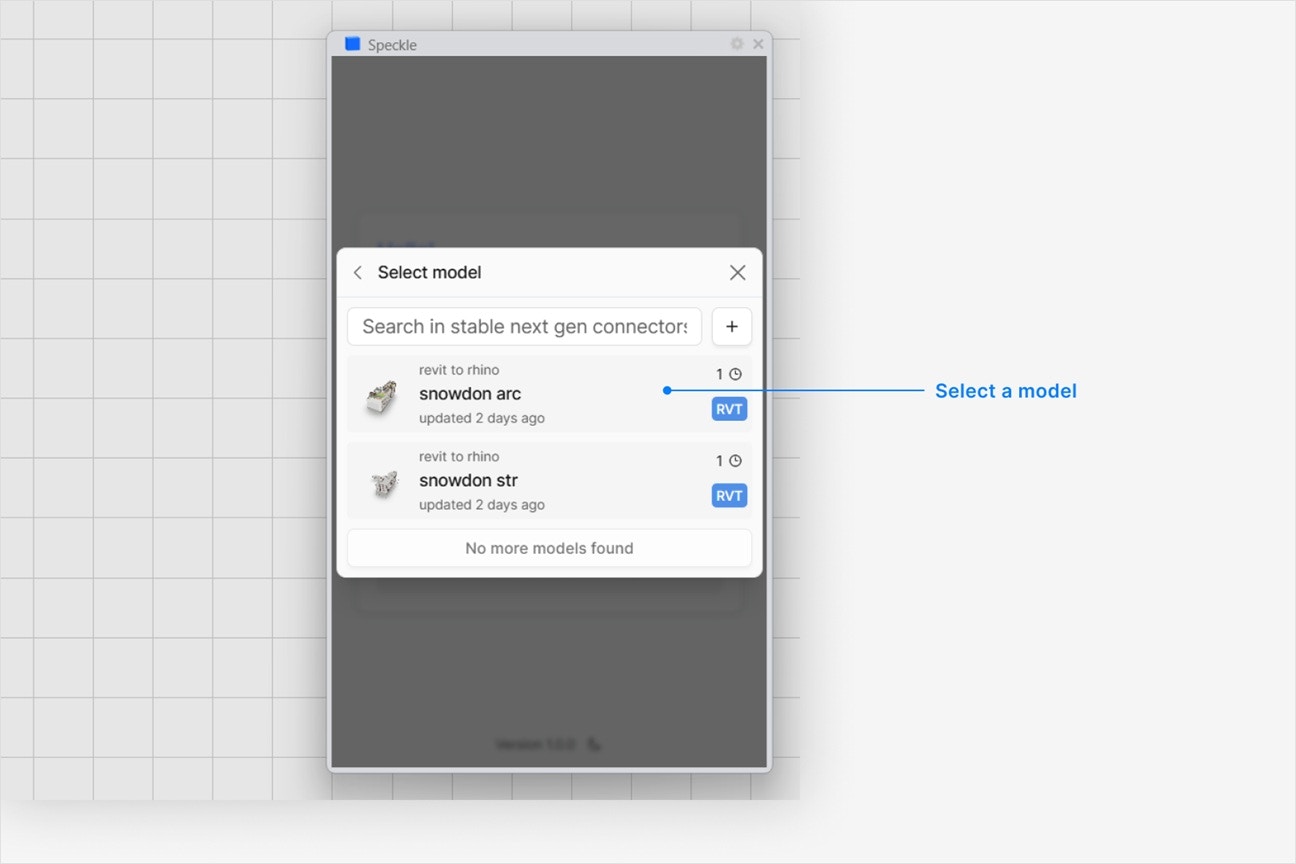 * Latest version is always first.
* To load a specific version, select it from the UI.
* Latest version is always first.
* To load a specific version, select it from the UI.
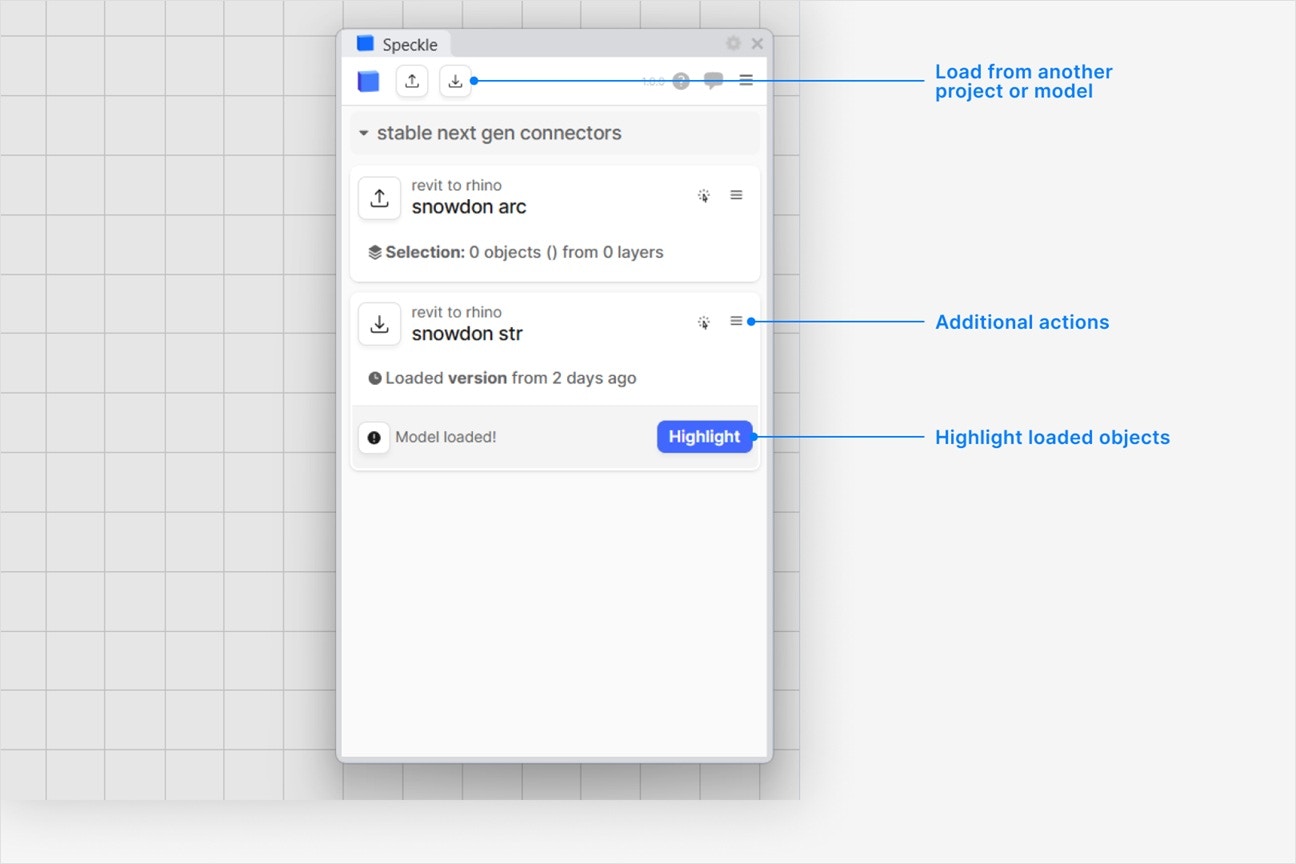 Your selected model is now loaded in {app_3}.
All objects in Speckle models are loaded as `geometry`, `text`, or `blocks` in Rhino. They're created in the same layer structure as what you see when viewing your model in your browser. Each object will be loaded with:
* Render material (if any)
* Color (if any)
* Name (if set)
* Custom properties as user strings
Yes, all custom properties found under the **properties** field will be created as user strings in Rhino.
Existing material will be used instead of creating a new one.
When you receive updated versions of the same model, the Rhino connector preserves your existing materials. This means any manual adjustments you make to material properties (such as colors, textures, or other rendering attributes) will persist across subsequent receives.
Yes. When you load a model that contains views, they are automatically
created as **named views** in Rhino — no extra steps needed.
Notes:
* If a named view with the same name already exists in Rhino, it will be skipped
and not overwritten.
* Views published from other connectors (e.g., Revit 3D perspective views) are
also received as named views in Rhino.
After you load a Speckle model, click on the **Report** button to see any errors that may have
occurred. Click on any item in the report to highlight that item in your application. Some objects
may not be supported for loading in {app_4}.
**Image texture files are not supported.** Speckle does **not** transfer bitmaps or other image maps (such as JPG or PNG files) embedded in materials from the source application.
Speckle **does** carry [PBR-style material data](/developers/sdks/python/guides/understanding-speckle-mesh#render-materials) in general—where a connector maps to it, materials can include properties such as base colour, opacity, metalness, roughness, and emissive colour. That is not the same as shipping texture images: you get numeric material parameters, not image assets used for wood grain, brick patterns, and similar in the authoring tool.
Different materials can still appear separately in the destination with distinct colours and PBR fields. What you see may look closer to a consistent shaded or PBR preview than to the full render-appearance with image maps in tools such as Revit or SketchUp. To use image textures in your target application, apply or remap them locally after you publish or load.
This happens when you don't have permissions to load a project. Contact the project owner to
change your role.
Yes. Next to the search box in the project selection dialog, there's an **Add model by URL**
option. Paste the model URL there.
Your selected model is now loaded in {app_3}.
All objects in Speckle models are loaded as `geometry`, `text`, or `blocks` in Rhino. They're created in the same layer structure as what you see when viewing your model in your browser. Each object will be loaded with:
* Render material (if any)
* Color (if any)
* Name (if set)
* Custom properties as user strings
Yes, all custom properties found under the **properties** field will be created as user strings in Rhino.
Existing material will be used instead of creating a new one.
When you receive updated versions of the same model, the Rhino connector preserves your existing materials. This means any manual adjustments you make to material properties (such as colors, textures, or other rendering attributes) will persist across subsequent receives.
Yes. When you load a model that contains views, they are automatically
created as **named views** in Rhino — no extra steps needed.
Notes:
* If a named view with the same name already exists in Rhino, it will be skipped
and not overwritten.
* Views published from other connectors (e.g., Revit 3D perspective views) are
also received as named views in Rhino.
After you load a Speckle model, click on the **Report** button to see any errors that may have
occurred. Click on any item in the report to highlight that item in your application. Some objects
may not be supported for loading in {app_4}.
**Image texture files are not supported.** Speckle does **not** transfer bitmaps or other image maps (such as JPG or PNG files) embedded in materials from the source application.
Speckle **does** carry [PBR-style material data](/developers/sdks/python/guides/understanding-speckle-mesh#render-materials) in general—where a connector maps to it, materials can include properties such as base colour, opacity, metalness, roughness, and emissive colour. That is not the same as shipping texture images: you get numeric material parameters, not image assets used for wood grain, brick patterns, and similar in the authoring tool.
Different materials can still appear separately in the destination with distinct colours and PBR fields. What you see may look closer to a consistent shaded or PBR preview than to the full render-appearance with image maps in tools such as Revit or SketchUp. To use image textures in your target application, apply or remap them locally after you publish or load.
This happens when you don't have permissions to load a project. Contact the project owner to
change your role.
Yes. Next to the search box in the project selection dialog, there's an **Add model by URL**
option. Paste the model URL there.